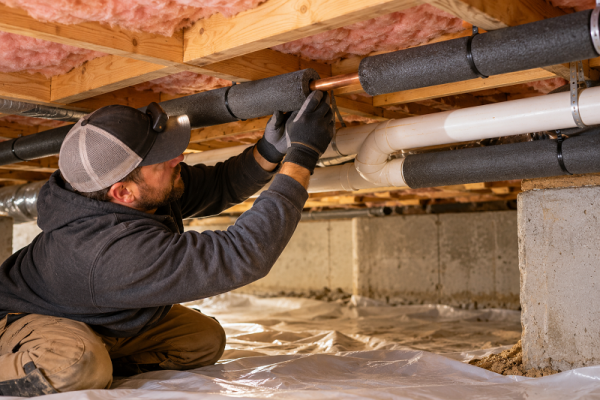
 Unheated basements and crawlspaces present a major winter vulnerability for Minnesota homes. During prolonged freezing temperatures, exposed supply lines running through these unconditioned spaces lose heat rapidly through conduction and convection. When static water inside the pipe freezes, it expands by approximately 9%, generating internal pressures that can easily exceed 2,000 psi—far beyond the burst threshold of standard copper, PEX, or CPVC piping.
Properly insulating these critical plumbing runs provides a thermal barrier that slows heat loss, maintains higher ambient water temperatures, and prevents costly pipe bursts and subsequent water damage.
- Primary Vulnerability Zones
Pipes located in unconditioned subterranean spaces face unique risks due to drafts, structural proximity, and airflow:
- Exterior Foundation Walls: Pipes running along or attached directly to rim joists and exterior concrete or block walls suffer from conductive cold transfer.
- Draft Corridors: Crawlspace vents, rim joist gaps, and unsealed floor penetrations create localized wind-chill effects that freeze static pipes rapidly.
- HVAC Supply Gaps: Plumbing lines routed outside of the home’s thermal boundary do not benefit from radiant indoor heat, leaving them entirely reliant on insulation and ambient ground temperatures.
- Recommended Pipe Insulation Materials
Selecting the correct insulation material depends on the pipe material, ambient humidity levels, and space constraints:
- Self-Sealing Polyethylene Foam: An economical, closed-cell foam ideal for straight runs of standard copper and PEX piping. Provides strong thermal resistance and built-in moisture protection.
- Tubular Elastomeric Rubber (Armaflex/Rubatex): Highly flexible closed-cell rubber excellent for high-humidity crawlspaces. Naturally resists mold growth and prevents condensation on cold water lines.
- Pre-Formed Fiberglass Sleeves: Preferred for high-temperature hot water lines. Must be sealed with a vapor barrier jacket to prevent moisture absorption in damp basement environments.
- Step-by-Step Installation Protocol
To achieve maximum freeze protection, insulation must be installed without gaps or compression points:
- Inspect and Repair: Inspect all exposed piping for minor leaks or existing corrosion prior to installation. Repair any defects before covering.
- Seal Air Leaks First: Seal rim joists, crawlspace vents, and foundation gaps using expanding spray foam or exterior-grade sealant. Stopping cold drafts is critical for insulation to perform effectively.
- Size the Insulation Properly: Match the internal diameter (ID) of the insulation sleeve to the outer diameter (OD) of the pipe to prevent air gaps.
- Cover Joints and Fittings: Cut miter joints at elbows and tees. Use dedicated foam tape or rubber wrap to seal every seam, joint, and connection completely.
- Secure the Sleeves: Fasten seams using manufacturer-approved acrylic tape or cable ties. Avoid over-tightening, as compressing the insulation material reduces its overall R-value.
- Supplementary Freeze Protection Strategies
In severe northern climates where temperatures drop well below zero, insulation alone may need to be paired with active heat sources:
- Thermostatically Controlled Heat Tape: Apply self-regulating heat trace cable directly along the pipe before installing foam insulation to provide active thermal protection during extreme cold spells.
- Crawlspace Vapor Barriers: Encapsulating a crawlspace with a heavy-duty vapor barrier reduces humidity, prevents ground frost heave, and stabilizes ambient temperatures.
Insulating exposed pipes in unheated basements and crawlspaces is one of the most effective, cost-efficient measures homeowners can take to prevent catastrophic freeze damage during harsh winter months. By sealing cold drafts, choosing high-quality insulation materials, and ensuring seamless installation, you protect your plumbing infrastructure and enjoy peace of mind all season long. If you need assistance winterizing your water lines or evaluating your home’s freeze vulnerabilities, trust the experienced team at Dan’s Plumbing & Septic to keep your plumbing system safe, efficient, and running smoothly year-round.